 metallic name plate for home
4 days ago in Business Services
A2Bookmarks Egypt Social Bookmarking Website
اكتشف منصة A2Bookmarks مصر، المنصة المتخصصة في حفظ الروابط الاجتماعية المصممة خصيصًا للمستخدمين والشركات في مصر. تتيح لك منصتنا، باعتبارها من أبرز مواقع حفظ الروابط الاجتماعية في السوق المصري، حفظ وتنظيم ومشاركة المحتنى الإلكتروني القيم مع اكتشاف فرص جديدة عبر أقسام الأعمال المُنتقى وأحدث insights السوق. احصل على روابط خلفية عالية الجودة لتحسين ترتيب موقعك في نتائج محركات البحث المصرية والعالمية من خلال منصتنا المتخصصة. وسّع انتشار منشوراتك وارفع ظهورها عبر نشرها في أكبر مجتمع عربي مختص بحفظ المشاركات والروابط الاجتماعية. استفد من ميزاتنا المُحسنة لمحركات البحث لتعزيز ظهورك الإلكتروني، وجذب زيارات مستهدفة، والبقاء في صدارة اتجاهات الصناعة. سواء كنت تسعى لتعزيز حضور علامتك التجارية أو التواصل مع المجتمع الرقمي في مصر، تقدم A2Bookmarks مصر الأدوات الأساسية للنمو الرقمي. انضم اليوم واغتنم قوة مواقع الحفظ الاجتماعي لتغيير طريقة إدارتك ومشاركتك للموارد الإلكترونية القيمة مع تعظيم تأثير عملك في جميع أنحاء مصر من خلال منصتنا المتخصصة لحفظ الروابط الاجتماعية.
How Can Custom Shopping Bags Dubai Businesses Choose Improve Their Packaging
metallic name plate for home
4 days ago in Business Services
Packaging is part of the customer experience, from the moment a purchase is handed over at the counter to the time it reaches someone’s home. A practical bag protects products, makes carrying them easier and gives a business another opportunity to present its identity. When comparing custom shopping bags Dubai businesses should consider more than the printed logo. Material, size, handle strength, construction and printing quality all influence whether a bag is suitable for its purpose. A clothing boutique may need a different style from a supermarket, gift shop or exhibition organiser. Understanding the available materials and design options helps retailers select packaging that reflects their brand while meeting everyday requirements.
What Should Buyers Know About Custom Shopping Bags Dubai?
Custom shopping bags can be produced in different materials, shapes and sizes to suit a wide range of businesses. The right choice depends on what the bag will carry, how often it may be reused and the impression a retailer wants to create.
Why businesses choose customised bags
A plain bag performs a basic carrying function, but a customised design can also display a business name, logo, colour scheme or short message. This can help customers recognise the business when they see the bag again.
For example, a clothing shop may use bags printed with its logo and a simple pattern that matches its store design. A bakery might prefer a compact paper bag with its name and a small illustration. Both serve the same basic purpose, but their packaging reflects different products and customer experiences.
Customisation also allows businesses to choose dimensions and handle styles that suit their products rather than relying on one standard bag for every purchase.
Factors that influence the choice
Before selecting a bag, consider the following practical points:
- Product weight: The material, base and handles must be suitable for the items being carried.
- Bag dimensions: The width, height and depth should provide enough room without making the bag unnecessarily large.
- Expected use: Some bags are intended for one shopping trip, while others are designed for repeated use.
- Brand appearance: Material colour, printing and finishing should complement the business’s visual identity.
- Storage: Large quantities of bags need suitable storage space, particularly when they have fixed shapes or handles.
Considering these points at the beginning makes it easier to compare materials and avoid ordering packaging that does not meet the business’s needs.
Which Materials Are Suitable for Shopping Bags?
The material affects the appearance, strength, weight and practical use of a shopping bag. Paper, jute and non-woven fabric are among the options businesses may consider. Each has advantages and limitations, so the decision should be based on the intended application.
Paper bags for retail packaging
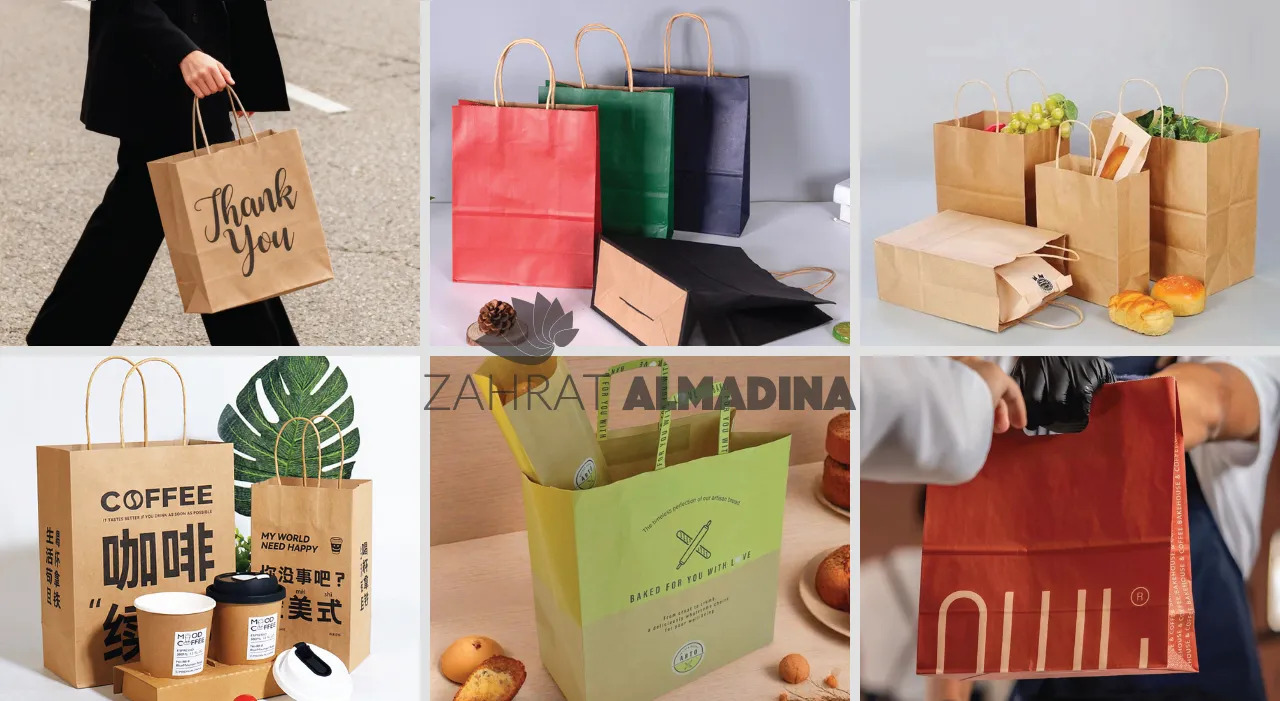
Paper bags are available in several grades, colours and constructions. They are commonly used by clothing shops, gift retailers, cafés and other businesses that need convenient packaging for everyday purchases.
Kraft paper has a natural brown appearance, although bleached white versions are also available. Paper weight, folding, glued sections and handle construction all influence the finished bag’s strength.
Paper bags can be supplied with flat handles, twisted paper handles or die-cut openings. A flat-bottom design is useful when products need a stable base, while a simple flat bag may be sufficient for lightweight purchases.
Their main limitation is sensitivity to moisture. Paper can weaken when wet, and a bag may lose its shape if it is overloaded. Businesses should therefore select an appropriate construction rather than assuming every paper carrier will suit every product.
Jute bags for repeated use
Jute is a natural plant-based fibre with a distinctive woven texture. Its appearance is often chosen by businesses looking for a more traditional or understated style.
A bag made from jute can be suitable for groceries, clothing, event materials and gift packaging. Its strength depends on the fabric, stitching, base and handle attachment. Some designs also include a laminated layer to provide a firmer structure or a different finish.
Jute bags are generally heavier and bulkier than lightweight paper carriers. They may also require more storage space. However, their construction can make them suitable for repeated use when they are properly maintained.
Non-woven fabric bags
Non-woven bags are made from fibres bonded together rather than woven into a conventional fabric. Polypropylene is commonly used for this type of material.
They are available in different colours, sizes and handle configurations. Their lightweight construction makes them useful for exhibitions, supermarkets, promotional campaigns and general retail packaging.
The thickness of the material and the quality of the stitching influence how well a bag performs. A thin bag may be suitable for lightweight products, while heavier purchases need a more substantial construction.
The environmental impact of non-woven bags should also be considered carefully. Their reusability depends on how they are made and how often customers use them. They should not automatically be described as environmentally friendly simply because they can be reused.
How Do Different Printed Bag Styles Compare?
The shape and construction of a bag should match its intended use. Choosing a suitable style makes packing more convenient and can reduce the risk of handles, seams or bases failing during normal handling.
Custom printed jute bags
Businesses selecting custom printed jute bags can choose between natural finishes, coloured fabric and different handle styles. The woven surface gives the bag a noticeable texture, which can complement simple logos and bold graphics.
These bags are often suitable for gift shops, lifestyle retailers, markets and businesses that want a reusable carrier. A natural jute bag with a dark green logo, for instance, can create a simple design without requiring several printed colours.
Because the fabric has a visible weave, very small lettering and fine details may not reproduce as clearly as they would on a smooth surface. Artwork should be prepared with this in mind, and a sample print is useful before approving a larger order.
Custom printed kraft paper bags
For businesses choosing custom printed kraft paper bags, the main decisions include paper shade, thickness, dimensions and handle type.
Natural brown kraft paper works well with many dark colours, while white kraft provides a brighter background for more colourful designs. Bags can be made with side gussets, flat bases or reinforced handle areas, depending on the products they need to carry.
A boutique selling accessories might use small kraft bags with twisted handles and a central logo. A food retailer may need a different structure, with suitable materials for the intended packaging application. Where bags will come into contact with food, the paper, inks, coatings and adhesives must meet the relevant requirements.
Customized non woven bags
Customized non woven bags are available in a wide range of colours and shapes. A business can select a simple rectangular carrier, a wide-bottom bag or a larger tote depending on the items it sells.
These bags are commonly used for exhibitions, conferences and promotional campaigns because they can hold brochures, catalogues and other lightweight merchandise. Some styles include long shoulder handles, while others have short handles for hand carrying.
The fabric thickness should be checked before ordering. Handle stitching and the connection between the sides and base are equally important, particularly when the bag will carry several products.
Printed drawstring bag
A printed drawstring bag has a simple opening that can be closed by pulling cords along the top. It is often made from lightweight polyester, cotton or another suitable fabric.
This style is useful for carrying gym accessories, small personal items, event merchandise and promotional products. It is less suited to heavy or rigid items unless the material and construction have been designed for that purpose.
For a sports event, organisers might choose drawstring bags featuring the event name and a simple graphic. Their lightweight design makes them easy to distribute, although cord quality and stitching should be checked before production.
How Should Businesses Plan Their Bag Designs?
Good design makes a bag recognisable without making it difficult to read or expensive to produce. The artwork should work with the material and available print area.
Keep branding clear
A logo is often the most important design element. It should be large enough to recognise but should not dominate the entire bag unless that is part of the intended style.
A simple layout might include a business logo in the centre with a small line of text beneath it. Retailers can also use a repeated pattern or a distinctive brand colour to create a consistent appearance across different bag sizes.
Too much text can make a design difficult to understand, particularly when customers view it from a distance. Include only information that serves a clear purpose.
Choose colours that suit the material
The colour of the bag affects how printed artwork appears. A logo designed for white material may look noticeably different on natural brown kraft paper or textured jute.
Dark colours generally provide strong contrast on natural kraft and jute surfaces. On coloured non-woven fabric, the background and ink colours should be checked together to ensure that the artwork remains visible.
Where colour accuracy is important, request a physical sample instead of approving the design based only on a screen preview.
Consider the available print area
A bag’s front panel is not always available for printing from edge to edge. Seams, folds, gussets and handle attachments can affect the usable area.
Place important design elements away from these areas. A centred logo should have enough clear space around it, while small text should remain readable after the bag is assembled.
Prepare artwork for production
The artwork file should be clear and suitable for the chosen printing process. Vector files are useful for many logos because they can be resized without losing sharpness.
Before approving the design, check spelling, proportions, colours and alignment. A production proof should show the artwork in relation to the actual bag shape, not simply as a flat image.
Where Are Custom Bags Used Across Different Industries?
Custom bags are useful in many business settings, but the most suitable material and design will differ according to the products and customers involved.
Clothing shops and boutiques
Clothing retailers often need bags that can hold folded garments, accessories or smaller boxed items. A wide paper bag may suit lighter purchases, while a jute or non-woven tote may be appropriate when repeated use is part of the intended design.
Handle length matters when customers are likely to carry several purchases. The bag should also be wide enough to accommodate clothing without forcing customers to fold or compress products unnecessarily.
Supermarkets and grocery retailers
Grocery purchases can vary considerably in weight and shape. A suitable shopping bag needs a stable base, secure handles and enough space for everyday products.
Reusable fabric carriers may suit customers who bring bags back for future visits. Paper bags can be practical for lighter purchases, provided they are kept away from moisture and are not overloaded.
Retailers should consider how bags will be stored at checkout and how easily staff can open and fill them.
Exhibitions and promotional campaigns
Businesses attending trade shows often distribute catalogues, product samples and small gifts. A bag makes these materials easier for visitors to carry around a venue.
For example, an exhibition organiser might prepare non-woven bags containing a programme, notebook and pen. The printed design can include the event name, date and organiser’s logo without filling every available panel.
Gift shops and special occasions
Gift retailers may need packaging that complements the product inside. Jute, kraft paper and fabric bags can each suit different styles of merchandise.
A shop selling handmade candles may select kraft paper bags with a simple printed design, while a retailer offering premium accessories might choose a more structured bag with carefully finished handles.
The packaging should also provide suitable protection. A decorative carrier does not replace internal wrapping or protective packaging when the product is fragile.
What Should Buyers Consider When Ordering Luxury Gift Bags?
Some businesses need bags that form part of a more carefully presented gift package. In these cases, the appearance and construction of the bag should complement the items inside.
Matching bags with luxury corporate gifts
Companies comparing luxury corporate gifts dubai options may include customised bags as part of the overall presentation. A coordinated bag can hold items such as notebooks, drinkware, stationery or selected gift products.
The material should suit the value and style of the contents. A heavier paper bag with reinforced handles may be appropriate for a structured gift set, while a fabric tote could suit a collection intended for continued use.
The aim is to create a consistent presentation without making the packaging unnecessarily elaborate.
Check finishing details
Small details can influence how a gift bag looks and feels. These may include:
- Reinforced bases and handle areas.
- Neatly folded corners and edges.
- Consistent print placement.
- Suitable handle materials.
- Matching colours across the bag and other packaging.
Special finishes should be chosen with the intended use in mind. For example, a glossy surface may create a different appearance from an uncoated natural finish, but it may also affect the overall style of the gift.
Plan the complete package
Measure the products before selecting the bag. A gift set containing a bottle, notebook and small accessory needs sufficient width, depth and height. It may also require internal inserts or protective wrapping to stop the contents moving around.
The bag should be large enough to fit everything comfortably, but not so oversized that the items shift during carrying.
Businesses comparing local printing options may include suppliers such as Zahrat Al Madina Printing in their research, while evaluating the actual bag samples, material specifications, printing quality and quotations available.
How Can Buyers Avoid Common Ordering Mistakes?
A well-planned order starts with accurate information. Many packaging problems can be avoided by checking the specifications before production begins.
Do not choose material based only on price
A cheaper bag may have thinner material, weaker stitching or handles that are not suitable for the intended load. Compare complete specifications rather than looking only at the quoted price.
Ask what material is being used, how the bag is constructed and whether the quoted price includes printing on one or both sides.
Avoid choosing the wrong size
A bag that is too small can make packing difficult, while an oversized one may waste material and take up more storage space.
Measure representative products and consider whether customers will carry one item or several together. For mixed product ranges, two or more bag sizes may be more practical than a single standard option.
Do not overlook samples
A digital mock-up cannot show the actual paper texture, fabric thickness or handle construction. Request a physical sample when possible, especially for large orders or designs that require accurate colours.
Check how the bag feels when opened, whether it stands properly and whether the printed design is clear.
Confirm quantities and delivery arrangements
Businesses should establish the required quantity and delivery date before approving production. Events and seasonal campaigns often have fixed deadlines, so enough time should be allowed for artwork approval, sampling, manufacturing and transport.
A clear quotation should state the bag material, dimensions, handles, printing details, quantity and any special finishing requirements.
Conclusion
Choosing the right shopping bag involves balancing appearance with practical requirements. Paper, jute and non-woven materials each offer different characteristics, while the bag’s size, handles and construction determine how well it performs in everyday use. A clear design helps customers recognise a business, but it should never come at the expense of strength or convenience. By reviewing material specifications, checking printed samples and planning around the products being carried, businesses can select packaging that suits their customers and creates a consistent retail experience.
Report Story

Related Stories







Recent Stories